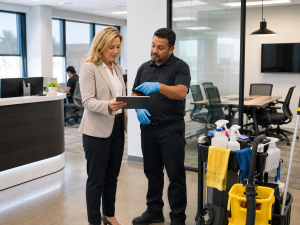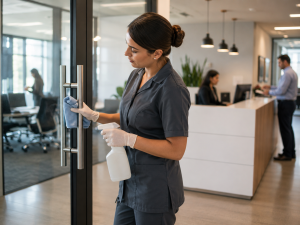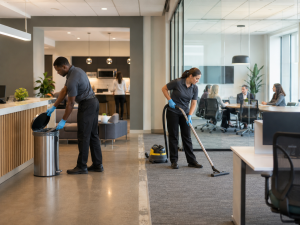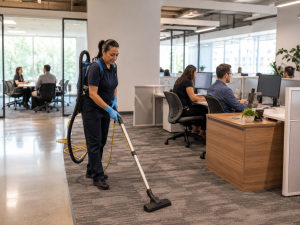
Many businesses and homeowners in McKinney start with the same approach: handle cleaning internally, save money, and manage it as needed. At first, this seems practical. Assign tasks, purchase supplies, and maintain a basic routine.
But over time, cracks begin to show—missed areas, inconsistent results, and growing frustration. This leads to the bigger question: is DIY cleaning actually effective long-term, or does hiring professionals deliver better results?
When comparing options like cleaning services in mckinney tx versus in-house cleaning, the answer often comes down to consistency, efficiency, and long-term impact—not just cost.
What DIY Cleaning Looks Like in Practice
DIY cleaning typically involves:
- Assigning cleaning responsibilities to employees or staff
- Hiring a part-time or in-house cleaner
- Using basic cleaning tools and supplies
- Cleaning only when needed or on a loose schedule
At a glance, this approach appears cost-effective. There’s no contract, no external vendor, and expenses seem limited to supplies and occasional labor.
However, the reality is more complex.
The Hidden Challenges of DIY Cleaning
While DIY cleaning works in the short term, several issues tend to emerge:
Inconsistency
Cleaning quality often varies depending on who is responsible and how much time they have. Tasks may be rushed, skipped, or done differently each time.
Lack of Accountability
When cleaning isn’t someone’s primary role, it’s easy for standards to slip. There’s no clear system ensuring tasks are completed thoroughly.
Limited Expertise
Most employees aren’t trained in proper cleaning techniques. This can lead to:
- Ineffective sanitation
- Improper product use
- Missed high-risk areas
Time Disruption
Assigning cleaning tasks to employees takes time away from their actual responsibilities, reducing overall productivity.
What Professional Cleaning Services Provide
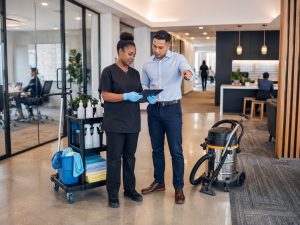
Professional cleaning services operate with a completely different structure. Instead of reactive or informal cleaning, they follow defined systems designed for consistency and efficiency.
Typical advantages include:
- Trained cleaning teams
- Structured schedules
- Commercial-grade equipment
- Defined quality standards
This approach ensures that cleaning is not just completed—but done correctly and consistently.
Consistency: The Biggest Difference
One of the most noticeable differences between DIY and professional cleaning is consistency.
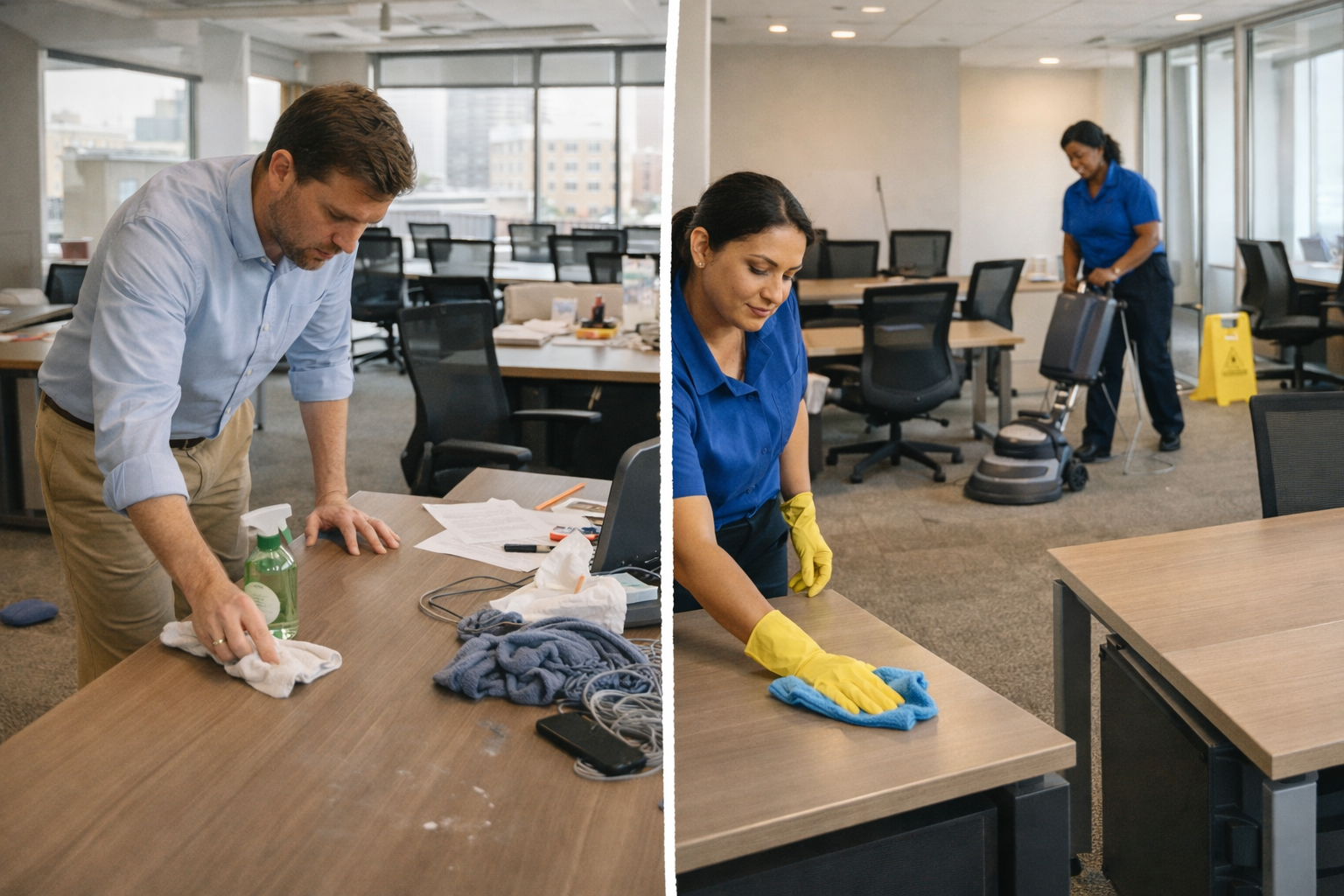
DIY Cleaning
- Varies from day to day
- Dependent on individual effort
- Often reactive
Professional Cleaning
- Follows a fixed schedule
- Uses standardized processes
- Maintains consistent results
Consistency is critical because it prevents buildup, reduces long-term issues, and maintains a professional environment at all times.
Efficiency and Time Management
Time is one of the most underestimated factors in cleaning.
With DIY cleaning:
- Tasks are often delayed or rushed
- Employees multitask, reducing efficiency
- Cleaning may interrupt core business operations
Professional teams, on the other hand:
- Work with optimized processes
- Use specialized tools for faster results
- Complete tasks without disrupting daily operations
This efficiency translates into both time savings and better outcomes.
Quality of Cleaning Results
There’s a clear difference in the level of detail achieved.
DIY Cleaning Limitations
- Focus on visible areas only
- Limited tools and equipment
- Inconsistent attention to detail
Professional Cleaning Standards
- Thorough cleaning of all areas
- Attention to high-touch and hidden surfaces
- Use of proper techniques for different materials
This difference becomes especially noticeable in high-traffic areas, restrooms, and shared spaces.
Cost Comparison: Short-Term vs Long-Term
At first glance, DIY cleaning appears cheaper. However, when looking at the bigger picture, the cost comparison changes.
DIY Costs
- Cleaning supplies
- Employee time
- Potential re-cleaning
- Higher wear and tear on assets
Professional Cleaning Costs
- Service fees
- Scheduled maintenance
While professional services involve a direct cost, they often reduce:
- Long-term maintenance expenses
- Equipment replacement costs
- Productivity losses
Over time, many businesses find that professional cleaning delivers better value.
Health and Safety Considerations
Health standards have become increasingly important in shared spaces.
DIY cleaning often falls short in:
- Proper disinfection practices
- Consistent sanitation of high-touch areas
- Managing bacteria and allergens
Professional services follow structured protocols that prioritize hygiene and safety, helping reduce risks for both employees and customers.
Scalability and Flexibility
As businesses grow, cleaning needs become more complex.
DIY cleaning struggles to scale because:
- It relies on limited resources
- Processes are not standardized
- Additional workload creates strain
Professional cleaning services offer flexibility:
- Adjustable schedules
- Scalable services
- Ability to handle larger or more complex spaces
This makes it easier for businesses to adapt without compromising cleanliness.
When DIY Cleaning Might Still Work
There are situations where DIY cleaning can be sufficient:
- Very small spaces
- Low foot traffic environments
- Short-term or temporary setups
However, even in these cases, periodic professional cleaning is often beneficial to maintain standards.
When Professional Cleaning Becomes Essential
For most businesses, there comes a point where DIY cleaning is no longer enough.
Signs include:
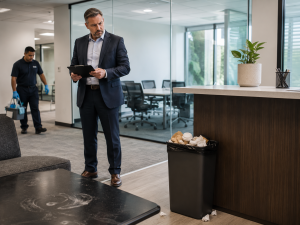
- Frequent complaints about cleanliness
- Visible buildup or wear
- Increased maintenance costs
- Difficulty maintaining consistency
At this stage, transitioning to professional cleaning is not just beneficial—it’s necessary.
The Impact on Business Image
Cleanliness directly affects how a business is perceived.
DIY cleaning can create:
- Inconsistent presentation
- Missed details
- Negative impressions
Professional cleaning ensures:
- A polished, professional environment
- Consistent standards
- Positive customer experiences
In competitive markets, this difference can influence client decisions.
Why Many Businesses Make the Switch
Over time, many businesses realize that DIY cleaning creates more challenges than it solves.
The shift to professional services is often driven by:
- Need for consistency
- Desire to improve workplace standards
- Long-term cost considerations
Once the transition is made, the benefits are usually immediate and noticeable.
Making the Right Choice for Your Space
Choosing between DIY and professional cleaning depends on your goals.
If your priority is:
- Minimal upfront cost → DIY may seem appealing
- Long-term value and consistency → professional services are the better option
Businesses that prioritize quality, efficiency, and long-term performance tend to benefit most from professional cleaning solutions.
If you’re weighing the pros and cons of handling cleaning internally versus outsourcing, the best step is to evaluate what your space actually needs.
Get a clear recommendation tailored to your business:
Talk to a cleaning specialist
FAQ
Is DIY cleaning cheaper than professional cleaning services?
Initially, yes. However, long-term costs such as maintenance, inefficiency, and re-cleaning can make DIY more expensive over time.
What are the main benefits of hiring professional cleaners?
Professional cleaners provide consistency, efficiency, and higher-quality results using proper tools and techniques.
Can small businesses rely on DIY cleaning?
Small businesses can manage with DIY cleaning initially, but may still benefit from periodic professional services.
How do I know when to switch to professional cleaning?
Signs include inconsistent results, employee complaints, and increasing maintenance issues.