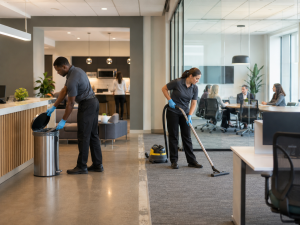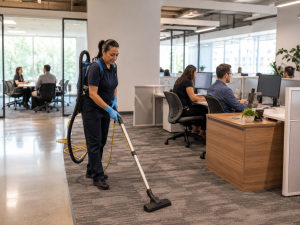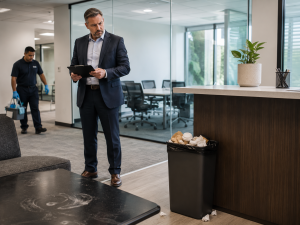
A commercial cleaning schedule should reflect how a workplace actually operates. Employee activity, customer traffic, restrooms, shared spaces, flooring, and operating hours all affect which responsibilities should be completed and when. Professional commercial cleaning services in McKinney, TX, can help businesses organize recurring work around actual facility use instead of applying the same checklist to every room.
An effective schedule gives the business and cleaning provider a shared reference. It identifies priority spaces, expected responsibilities, preferred service times, periodic work, access requirements, and the process for reporting concerns.
The goal is not to create an unnecessarily complicated document. A useful plan should be detailed enough that managers and cleaning team members understand what is expected during each visit.
Complete a Workplace Walkthrough
A practical cleaning plan begins with a walkthrough of the property.
Whenever possible, inspect the building during normal operating hours instead of immediately after it has been cleaned. This provides a more accurate view of where employees and visitors spend time, which rooms become untidy first, and where cleaning could interrupt normal operations.
The walkthrough should include:
- Entrances and reception areas
- Private offices
- Shared workspaces
- Conference rooms
- Restrooms
- Breakrooms and kitchens
- Hallways and common areas
- Storage and support spaces
- Customer-facing rooms
- Carpeted and hard-surface floors
Managers should note how each area is used. A conference room hosting several meetings each day may require more attention than an office occupied only occasionally. A breakroom serving a large staff may need stronger recurring care than a lightly used waiting area.
The walkthrough should also identify access concerns, confidential rooms, security procedures, customer appointment times, and spaces that cannot be cleaned during certain hours.
This review provides the information needed to build the schedule around the property’s actual operations.
Divide the Property Into Cleaning Zones
Organizing the building into zones makes responsibilities easier to assign.
Customer-Facing Zones
Entrances, reception areas, meeting rooms, showrooms, waiting areas, and customer restrooms influence how visitors experience the workplace. These spaces usually require dependable attention because visible concerns can affect workplace presentation.
Employee Shared Zones
Breakrooms, kitchens, hallways, copy areas, and collaborative spaces are used by several people. Crumbs, spills, waste, fingerprints, and floor debris can accumulate quickly when responsibility is shared.
Private Work Zones
Individual offices and low-traffic rooms may require less attention than common areas. Cleaning can focus on accessible surfaces, flooring, and waste without disturbing personal belongings or confidential papers.
Support Zones
Storage rooms, supply areas, and limited-access spaces may need less frequent attention, but they should still appear in the written plan so they are not forgotten.
Dividing the workplace into zones prevents cleaning time from being distributed equally across areas with very different levels of use.
Assign Every-Visit, Rotating, and Periodic Work
A practical schedule should separate responsibilities according to how often they need to occur.
Every Visit
These are the recurring priorities required to maintain normal workplace conditions. Depending on the property, they may include:
- Emptying designated waste containers
- Cleaning restrooms
- Checking restroom supplies
- Addressing priority flooring
- Wiping breakroom counters and tables
- Cleaning shared surfaces
- Removing fingerprints from entrance glass
- Addressing visible spills or debris
The wording should be specific. For example, “clean the breakroom” may be too broad if the business expects counters, sinks, tables, appliance exteriors, floors, and waste to be addressed.
Weekly or Rotating
These responsibilities can be distributed across different visits. Examples may include detailed dusting, selected offices, interior glass, cabinet fronts, corners, and lower-use rooms.
Monthly or Periodic
These tasks address gradual buildup or work requiring more time. Examples may include detailed baseboards, accessible vents, selected edges, and more involved attention to applicable flooring.
Periodic work should be assigned a timeframe instead of being left open-ended. Tasks without a planned interval are more likely to be postponed until their condition becomes noticeable.
Create Plans for Restrooms and Shared Spaces
Restrooms should not be treated as one small line on a general checklist.
A restroom plan should identify the included responsibilities, such as:
- Fixtures and sinks
- Mirrors and counters
- Floors
- Waste containers
- Frequently touched surfaces
- Supply checks
- Visible residue and odor concerns
The agreement should explain who provides paper products, soap, liners, and other supplies. When the cleaning provider is expected to restock them, the plan should identify where supplies are stored and who monitors inventory.
Businesses should also determine who handles immediate concerns during operating hours. A provider arriving after closing cannot respond to a midday spill or empty dispenser unless daytime service is included.
Breakrooms, kitchens, copy areas, and collaborative rooms also require clear boundaries. Employees should address immediate personal messes, while the professional cleaning plan establishes a dependable baseline for recurring care.
Shared-space responsibilities may include wiping counters and tables, cleaning sinks, wiping appliance exteriors, emptying designated waste, addressing floors, and cleaning frequently used handles.
The plan should also identify exclusions. Cleaning providers should not be expected to organize personal belongings, wash employee dishes, remove food from refrigerators, or clean inside appliances unless those services are specifically approved.
Document High-Touch Surfaces and Flooring Needs
A schedule should identify high-touch surfaces by location instead of relying on a broad instruction such as “wipe touchpoints.”
Relevant surfaces may include:
- Main entrance handles
- Interior door handles
- Light switches
- Reception counters
- Shared tables
- Appliance handles
- Cabinet pulls
- Shared equipment controls
The list should reflect actual use. A main entrance handle may require attention during each service, while a cabinet pull in a rarely used room may be a lower priority.
Flooring responsibilities should also be defined by area. Entrance floors may collect outdoor debris and moisture. Breakroom floors may experience food and drink spills. Carpeted offices may require routine vacuuming, while customer-facing hard floors can show footprints and marks quickly.
The schedule should identify flooring types, high-traffic pathways, customer-visible areas, entrance mats, spill-prone locations, and furniture or access limitations.
Routine vacuuming, mopping, and visible spot attention should be separated from more involved floor services. Specialized treatments should be discussed independently so they are not assumed to be part of every recurring visit.
Professional office cleaning services can organize routine flooring work alongside restroom, waste, and shared-space responsibilities.
Coordinate Service Times, Access, and Responsibilities
Even a detailed checklist can fail when cleaning occurs at the wrong time or access expectations are unclear.
Decision-makers should consider:
- Normal operating hours
- Employee arrival and departure
- Customer appointments
- Conference room bookings
- Phone-heavy work periods
- Building restrictions
- Alarm and security procedures
- Tasks that create noise or block access
Some workplaces prefer after-hours cleaning. Others require daytime service because they operate extended schedules or cannot provide access after closing.
The provider should know which rooms cannot be serviced during meetings and which areas must remain available throughout the day. Keys, access cards, alarm procedures, and security expectations should be documented so each visit does not depend on one employee being present.
The plan should also distinguish provider responsibilities from employee expectations. The provider may handle agreed work involving floors, restrooms, waste, accessible surfaces, and common areas. Employees may remain responsible for personal desks, confidential materials, dishes, food storage, and immediate personal spills.
It should identify who manages supplies, access credentials, schedule changes, special requests, and service feedback.
Businesses can confirm local availability through the Tailor Maid Clean service area.
Put the Checklist in Writing
A written checklist turns broad expectations into an actionable service plan.
The final document should identify:
- Included rooms and zones
- Every-visit responsibilities
- Rotating responsibilities
- Periodic work
- Excluded tasks
- Preferred cleaning times
- Supply arrangements
- Access instructions
- The primary communication contact
The document does not need to be overly complex. A table organized by room, responsibility, and timing may be enough.
Written expectations make service reviews more objective. Instead of saying the building does not look clean, the business can identify the specific room, responsibility, or timing that needs attention.
The checklist should be accessible to both the business and cleaning provider so everyone works from the same version. Updates should be dated to prevent outdated instructions from remaining in use.
Review and Update the Schedule
A cleaning plan should include a process for evaluating results.
Managers can complete periodic walkthroughs and gather specific feedback from employees who regularly use restrooms, breakrooms, conference rooms, and shared workspaces.
A review should consider:
- Whether agreed responsibilities are completed
- Whether results remain consistent
- Which rooms receive recurring complaints
- Whether rotating work is occurring
- Whether service times cause disruption
- Whether workplace activity has changed
Feedback should identify the location, concern, and expected result. Specific information is more useful than a general statement that the property needs more attention.
The schedule should be updated when staffing, operating hours, customer activity, room use, or access requirements change. Service may need to increase in one area and decrease in another.
Businesses can explore additional commercial cleaning articles or review services through the Tailor Maid Clean homepage.
Request a Customized Commercial Cleaning Schedule
Tailor Maid Clean can review workplace traffic, priority spaces, operating hours, access needs, and recurring responsibilities for McKinney businesses.
Request a Free Estimate to discuss a customized commercial cleaning schedule for your workplace.
Frequently Asked Questions
What should be included in a commercial cleaning schedule?
A commercial cleaning schedule should identify included rooms, every-visit responsibilities, rotating tasks, periodic work, preferred cleaning times, supply arrangements, access instructions, excluded responsibilities, and a process for reporting concerns.
How should a business decide which areas need the most attention?
Businesses should prioritize areas according to traffic, visibility, restroom use, food activity, customer access, and how quickly concerns develop. Entrances, restrooms, breakrooms, shared workspaces, and customer-facing rooms often require the clearest recurring instructions.
How often should a commercial cleaning schedule be reviewed?
The schedule should be reviewed periodically and whenever staffing, operating hours, customer activity, facility layout, access requirements, or workplace use changes. Recurring concerns or unnecessary work can also indicate that an update is needed.
Can McKinney businesses receive customized cleaning schedules?
Yes. A customized plan can be developed around the property’s operating hours, employee activity, customer traffic, restrooms, shared spaces, flooring, access needs, and priority areas.