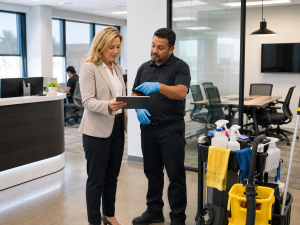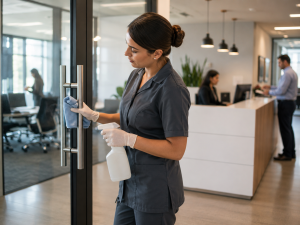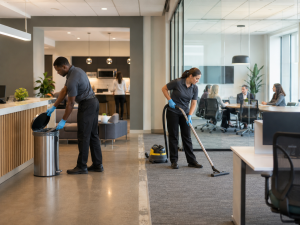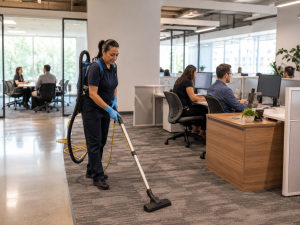
Employee productivity depends on many factors, including leadership, workload, communication, technology, and workplace culture. The physical condition of the office also matters because employees use the same shared rooms, surfaces, walkways, and facilities throughout the day. Professional office cleaning services in McKinney can help businesses maintain a more orderly environment so employees spend less time reacting to avoidable facility concerns.
For businesses in McKinney, Texas, office cleaning is not only about appearances. A consistent cleaning plan can help keep common areas, restrooms, breakrooms, meeting rooms, floors, and customer-facing spaces ready for regular use. This supports smoother daily operations without asking employees to take on recurring cleaning duties that fall outside their primary responsibilities. It also establishes clearer expectations for how commonly used workplace areas will be maintained.
This matters especially in offices where several employees share meeting rooms, kitchens, entrances, equipment, and restroom facilities. The more often those spaces are used, the more likely small maintenance concerns are to interrupt employees or require attention from a manager during normal business hours.
A Cleaner Office Reduces Everyday Distractions
Employees already manage emails, meetings, deadlines, customer requests, reports, and project work. Visible clutter, overflowing waste, floor debris, dusty shared surfaces, and untidy common areas add unnecessary distractions to an already busy workday.
A single interruption may seem minor. An employee may spend a few minutes wiping a conference table before a meeting or removing trash from a shared area. An office manager may stop another task to address a restroom concern or prepare the reception area before a visitor arrives. When similar interruptions happen repeatedly across the week, they can reduce the time available for higher-priority work.
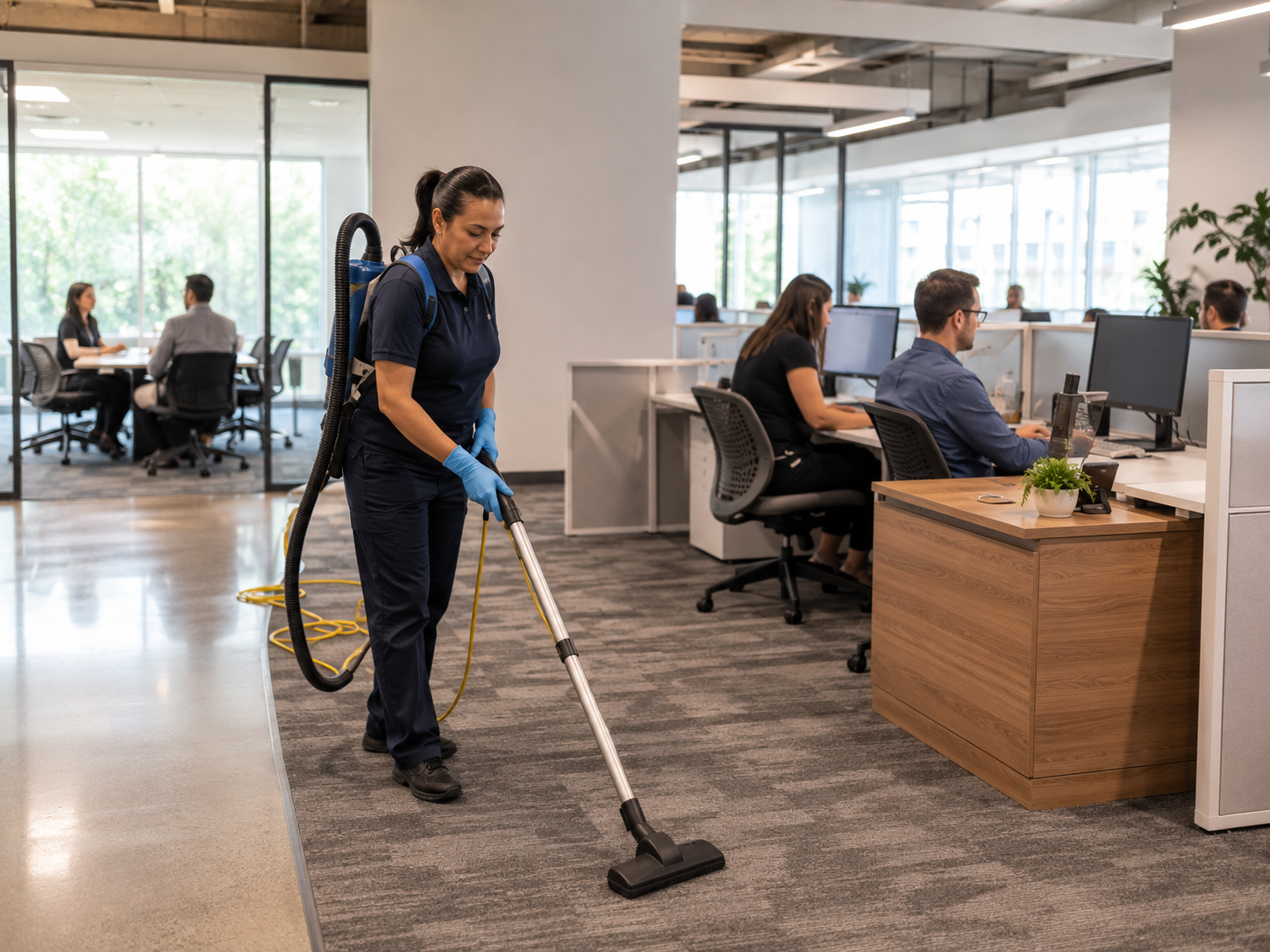
A professional cleaning plan creates a more dependable baseline for the workplace. Employees still remain responsible for personal organization, confidential documents, active projects, personal dishes, and immediate spills. The cleaning provider handles the agreed recurring facility tasks.
Common distractions that a structured plan can reduce include:
- Full waste containers
- Fingerprints on entrance glass
- Dust on shared surfaces
- Debris on floors
- Untidy meeting spaces
- Residue in breakrooms
- Restroom areas that need attention
- Unclear responsibility for common areas
The goal is not to make an active office look untouched. It is to keep normal workplace activity from creating preventable disruptions.
Employees Can Focus on Their Primary Responsibilities
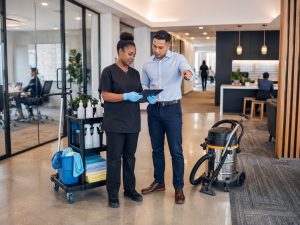
When there is no clear cleaning plan, recurring facility duties are often handled informally. One employee may regularly empty shared waste. Another may wipe tables before meetings. A manager may check restrooms, monitor common areas, or arrange last-minute cleaning before customers arrive.
These duties may be necessary, but they pull employees away from the work they were hired to perform. They can also create frustration when the same person repeatedly handles tasks simply because that person notices them first.
A structured plan can assign recurring responsibilities such as:
- Removing waste from shared areas
- Vacuuming and mopping designated floors
- Cleaning restrooms
- Wiping accessible common surfaces
- Cleaning interior entrance glass
- Refreshing breakrooms
- Preparing meeting rooms for regular use
- Addressing agreed high-touch areas
Clear expectations make it easier for employees to understand which tasks belong to them and which tasks belong to the cleaning provider. Staff members can manage personal belongings and active work materials while the provider maintains the surrounding environment.
This division supports productivity because fewer employees need to stop working to solve the same recurring facility problems. It also helps office managers avoid assigning cleaning duties at the last minute.
Shared Spaces Stay Ready for Daily Use
Shared rooms affect more than one employee because no single person fully controls them. Conference rooms, kitchens, copy areas, reception areas, hallways, and collaborative spaces may be used by many people during a normal workday.
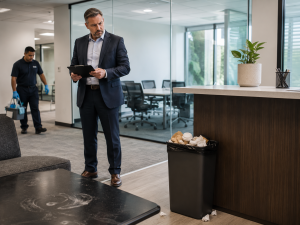
When these spaces are not maintained consistently, one group’s activity can create a problem for the next. A meeting room left untidy may delay the next discussion. A breakroom with full waste or residue on the counters may require attention before employees can use it comfortably. A reception area with visible debris may cause a manager to interrupt another task before a customer arrives.
Consistent cleaning helps keep shared spaces available for their intended purpose. A practical plan should consider:
- How many people use each area
- Whether customers enter the space
- When the room receives the most activity
- How quickly waste accumulates
- Whether food and drinks are present
- Which surfaces are touched most often
- When service can occur without disrupting work
This approach allows active areas to receive appropriate attention without treating every room as though it has the same level of use.
Maintained shared spaces also support smoother transitions throughout the day. Employees can enter a conference room that is ready for a meeting, use a breakroom without first clearing surfaces, and welcome visitors without organizing an emergency cleanup.
Restrooms and High-Touch Areas Affect Employee Comfort
Restrooms are essential workplace facilities. Employees may become distracted or frustrated when supplies are missing, waste containers are full, floors need attention, or fixtures are not cleaned consistently. Managers may also receive repeated complaints that require follow-up during working hours.
A restroom cleaning scope may include:
- Sinks and counters
- Mirrors
- Fixtures
- Floors
- Waste containers
- Frequently touched surfaces
- Odor concerns
- Agreed supply responsibilities
Businesses should also clarify who monitors supplies during the day. A provider scheduled after business hours may not be able to respond immediately to an unexpected shortage unless daytime support is included.
High-touch areas throughout the office also need clearly defined attention. Door handles, light switches, appliance handles, cabinet pulls, conference tables, reception counters, and shared equipment controls may be used by many people each day.
A general instruction to clean common areas may not be specific enough. The service scope should identify which high-touch surfaces are included and where they are located. Defined expectations make the work easier to evaluate and reduce the chance that frequently used areas will be overlooked.
Consistent Service Reduces Management Time
Office cleaning should not become another responsibility that managers must supervise constantly. A dependable arrangement should give the business a clear way to report concerns, request adjustments, and confirm which tasks are included.
A recurring service plan should outline:
- The agreed scope of work
- Cleaning responsibilities
- The service schedule
- Communication procedures
- A method for reporting missed tasks
- How changes in office activity will be handled
- Which services are not included
Specific expectations also improve feedback. Instead of saying the office does not look clean, a manager can identify a missed waste container, an incomplete floor area, an overlooked restroom task, or a recurring concern involving a particular shared surface.
This makes it easier for the provider to correct the issue and helps the business evaluate service consistency over time. Managers can spend less time repeating the same instructions and more time focusing on employees, customers, and daily operations.
Businesses considering broader facility support can review commercial cleaning services. They can also confirm local coverage through the service area page and review client testimonials for additional context about service experience.
A Maintained Workplace Supports Smoother Operations
A clean office does not guarantee stronger productivity on its own. Leadership, staffing, technology, workload, communication, and workplace systems continue to play major roles.
Professional cleaning can still remove avoidable obstacles from the workday. Employees are less likely to be interrupted by full waste, unavailable meeting spaces, untidy breakrooms, visible floor concerns, or recurring restroom issues. Managers can spend less time organizing last-minute facility tasks. Customer-facing areas remain better prepared for scheduled and unexpected visitors.
The operational value often comes from consistency. When employees know that shared areas will receive dependable attention, workplace cleaning becomes part of the normal routine instead of a recurring source of uncertainty.
A clearly written plan supports that consistency by identifying what will be cleaned, which areas receive priority, how concerns will be reported, and how the service can be adjusted when workplace activity changes. This allows the office to remain functional and orderly without shifting recurring cleaning duties back to employees.
Request an Office Cleaning Estimate
Tailor Maid Clean can review employee attendance, shared spaces, restrooms, operating hours, visitor traffic, and recurring workplace priorities when preparing a customized plan. Businesses in McKinney, Texas can request a free office cleaning estimate to discuss a service plan that supports a more orderly and productive work environment.
FAQ
How can professional office cleaning support employee productivity?
Professional cleaning can reduce avoidable distractions by maintaining shared waste, restrooms, floors, breakrooms, meeting rooms, and high-touch surfaces. Employees can spend more time on their primary responsibilities instead of repeatedly handling facility tasks.
Which recurring cleaning tasks most often interrupt office employees?
Common interruptions include emptying shared waste, cleaning meeting rooms before use, wiping breakroom surfaces, addressing floor debris, checking restrooms, and preparing reception areas before visitors arrive.
What office areas have the greatest effect on daily employee comfort?
Restrooms, breakrooms, shared workspaces, meeting rooms, entrances, floors, and high-touch surfaces often have the greatest effect because employees use them repeatedly throughout the workday.
Can professional office cleaning improve productivity by itself?
No. Cleaning does not replace effective management, appropriate workloads, reliable technology, communication, or strong workplace systems. It can support productivity by removing avoidable facility distractions and keeping shared spaces ready for regular use.