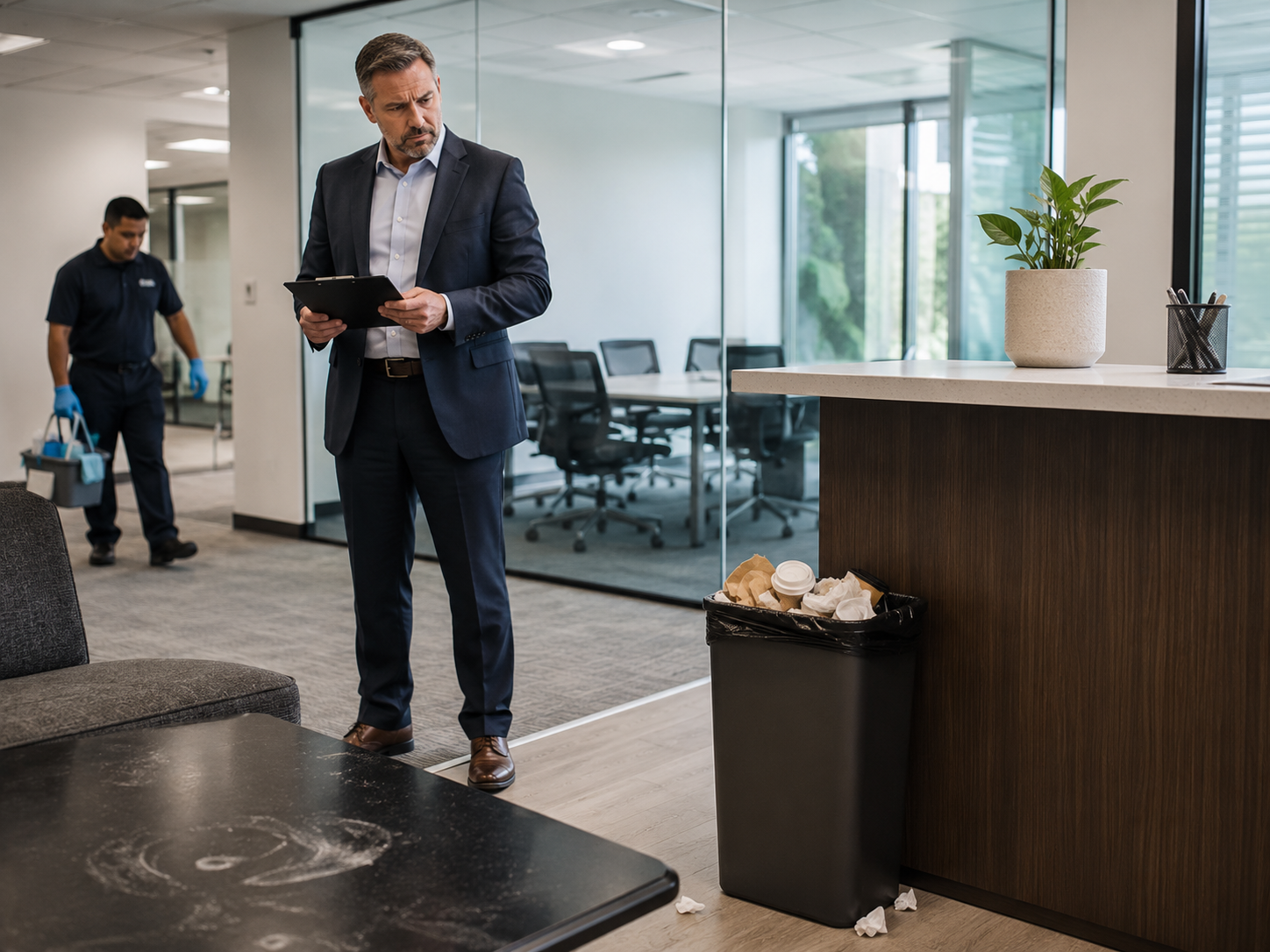
Commercial cleaning problems often develop gradually. A missed waste container or overlooked surface may appear minor at first, but recurring service gaps can create extra work for employees and managers. Businesses using commercial cleaning services in McKinney, TX, should expect clear responsibilities, dependable communication, and consistent attention to the services included in their agreement.
Replacing a cleaning provider should not be based on one isolated mistake. Occasional errors can happen in any recurring service relationship and may be resolved through clear communication. The concern begins when the same problems continue, corrections do not last, or the provider becomes difficult to reach.
A dependable cleaning relationship should reduce facility-management pressure. When the service repeatedly creates more follow-up work than it removes, it may be time to review the arrangement.
Repeated Service Gaps Continue After Feedback
An occasional oversight does not automatically mean a provider should be replaced. The more important question is whether the same responsibilities continue to be missed after they have been reported.
Common examples include:
- Waste containers being left full
- Restroom supplies not being checked
- Visible surfaces remaining dusty
- Breakroom counters being overlooked
- Floors being cleaned inconsistently
- Included rooms receiving no attention
Repeated omissions may indicate that responsibilities are unclear, instructions are not being followed, or quality concerns are not being identified before the visit ends.
Consistency is also important. A workplace should not look carefully maintained after one appointment and noticeably incomplete after the next. Some differences may occur because of unusual traffic, spills, or special events, but the overall standard should remain dependable.
Managers should not have to report the same problem after every service. When a concern is raised, the provider should acknowledge it, determine why it occurred, and take reasonable steps to prevent it from continuing.
A pattern of missed work, inconsistent results, and short-lived corrections is one of the clearest signs that the current arrangement needs formal review.
Communication Has Become Difficult
Cleaning concerns should be straightforward to report and resolve.
A business should not need to send repeated messages, contact several people, or wait an unreasonable amount of time for acknowledgment. Communication problems can become more frustrating than the original cleaning issue.
Warning signs may include:
- Messages regularly going unanswered
- Concerns being acknowledged but not corrected
- Schedule changes occurring without notice
- Different contacts providing conflicting information
- Requested adjustments being forgotten
Professional communication does not require an immediate solution to every concern. It does require timely acknowledgment, clear follow-up, and an explanation of what will happen next.
A dependable provider should also identify the correct contact for questions about service, scheduling, access, or recurring concerns. When no one appears responsible for resolving issues, minor problems can become long-term service gaps.
The Service Agreement Is Too Vague
A vague agreement makes accountability difficult.
Businesses should understand which areas and general responsibilities are included. They should also know whether certain work falls outside the regular agreement.
When expectations are unclear, the business and provider may develop different interpretations of what should occur. Managers may believe an overlooked task is included while the provider considers it an additional service.
A usable agreement should explain:
- Areas included in the service
- General cleaning frequency
- Restroom and waste responsibilities
- Routine floor and shared-space care
- Access and service times
- Excluded services and reporting procedures
The agreement does not need to contain every operational detail, but the basic responsibilities should be understandable and measurable.
A written scope protects both sides. It gives the business a reference when evaluating service and allows the provider to clarify responsibilities before concerns develop.
Employees and Managers Are Compensating for Poor Service
Employees should manage personal belongings, individual work areas, and immediate spills when appropriate. They should not regularly perform work the cleaning provider was expected to complete.
A service problem may be developing when employees repeatedly:
- Empty shared waste containers
- Restock restroom supplies
- Clean customer-facing rooms
- Prepare conference rooms before meetings
- Address breakrooms after scheduled cleaning
These responsibilities interrupt normal work and can create frustration. Results may also be inconsistent because facility cleaning is not the employees’ primary role.
Professional office cleaning services should provide a reliable baseline for recurring workplace care. Staff members should not have to compensate continually for incomplete service.
Managers may also spend increasing amounts of time inspecting rooms, documenting problems, sending follow-up messages, or arranging urgent cleanup before visitors arrive.
When employees and managers regularly correct unfinished work or report the same concerns, the service is no longer reducing operational pressure.
The Provider No Longer Fits Workplace Operations
Business needs can change over time.
A company may add employees, extend operating hours, welcome more visitors, open new rooms, or begin using shared areas differently. These changes can affect cleaning priorities, access, and service timing.
A provider may no longer be the right fit when it cannot reasonably respond to changes involving:
- Building access
- Service windows
- Customer-facing rooms
- Restroom use
- Waste volume
- Newly occupied or low-use spaces
Flexibility should work in both directions. A business may require additional attention in one part of the property while reducing unnecessary service elsewhere.
The issue is not whether every request can be accepted immediately. A dependable provider should discuss operational changes, explain available options, and update expectations when an adjustment is agreed upon.
Cleaning visits should also be coordinated to avoid unnecessary disruption. Recurring problems such as blocked work areas, meeting rooms being serviced during scheduled use, loud work during customer calls, or unexplained arrival changes may indicate that the provider no longer fits the workplace.
Pricing No Longer Matches the Service
Price alone should not determine whether a provider is retained or replaced. The lowest estimate may not include the consistency, communication, or scope the workplace requires.
Businesses should still understand what they are paying for and whether the agreed service is being delivered.
A review may consider:
- Current service frequency
- Areas included in the agreement
- Responsibilities the provider accepted
- Additional charges or recent price changes
- Recurring service concerns
- Management time spent resolving problems
A price increase may be reasonable when the property expands or service requirements change. Pricing becomes more concerning when costs rise while reliability declines or agreed responsibilities remain incomplete.
The objective is not simply to find a cheaper provider. It is to determine whether the current service provides reasonable value and reduces operational burden.
One Mistake Does Not Always Require Replacement
Changing providers can affect access procedures, keys, security instructions, scheduling, employee routines, and service continuity. Businesses should distinguish between an isolated mistake and an ongoing pattern.
Before replacing the current provider, decision-makers should:
- Document the concern clearly.
- Review the existing agreement.
- Confirm whether the responsibility was included.
- Report the issue through the appropriate contact.
- Allow a reasonable opportunity for correction.
- Monitor whether the improvement continues.
A provider that communicates clearly, accepts responsibility, and corrects the underlying issue may still be a useful long-term partner.
Replacement becomes more appropriate when problems continue after clear feedback and a reasonable opportunity to improve.
How to Evaluate a Replacement Provider
A new provider should be evaluated carefully rather than selected only because the current arrangement is disappointing.
Useful questions include:
- How will service responsibilities be documented?
- Who will be the primary contact?
- How are missed responsibilities handled?
- How are access and security procedures managed?
- Can the service adapt when workplace use changes?
- How is consistency monitored?
The potential provider should also ask questions about the property. A proposal created without understanding operating hours, customer-facing spaces, restrooms, flooring, access requirements, and workplace activity may not reflect the building’s actual needs.
Decision-makers should pay attention to how clearly the provider explains the proposed service. Vague promises may create the same accountability problems the business is trying to leave behind.
Businesses can confirm local availability through the Tailor Maid Clean service area and review additional commercial cleaning articles before comparing alternatives.
Planning an Organized Transition
Once a business decides to replace its provider, the transition should be managed carefully.
Review the current agreement for notice requirements, final billing, keys, access procedures, security instructions, and the agreed end date. Confirm when the existing provider will finish and when the replacement service will begin.
The incoming provider should receive a facility walkthrough, access instructions, preferred service times, a primary contact, and a summary of recurring concerns.
A detailed room-by-room plan can be developed after both sides agree on the overall responsibilities. Explaining what caused the previous arrangement to fail also helps establish clearer expectations from the beginning.
Choose a Provider That Reduces Management Pressure
A dependable commercial cleaning provider should make workplace care easier to manage.
Clear expectations, consistent results, responsive communication, and reasonable flexibility help establish a productive long-term relationship. Managers should not have to inspect every room after every visit or report the same concerns repeatedly.
For McKinney businesses, the right provider should understand how the workplace operates and communicate clearly when conditions or expectations change. More information about available services can be found through the Tailor Maid Clean homepage.
Request a Commercial Cleaning Estimate
Tailor Maid Clean can discuss current service concerns, workplace priorities, access needs, and the areas included in a McKinney commercial property.
Request a Free Estimate to discuss replacing an underperforming commercial cleaning provider.
Frequently Asked Questions
When should a business consider replacing its commercial cleaning provider?
A business should consider replacement when missed tasks, inconsistent results, communication problems, employee complaints, or scheduling issues continue after the provider has received clear feedback and a reasonable opportunity to improve.
Should a cleaning provider be replaced after one missed task?
Not necessarily. An isolated mistake can often be corrected through clear communication. Replacement may be more appropriate when the same problems recur, improvements are only temporary, or the provider does not respond constructively.
What should a business review before choosing a replacement provider?
The business should review communication procedures, service responsibilities, scheduling, access requirements, excluded services, and how missed work will be handled. A potential provider should also ask questions about how the facility operates before preparing a proposal.
What should McKinney businesses look for in a new cleaning provider?
Businesses should look for clear communication, understandable responsibilities, dependable scheduling, consistent service, reasonable flexibility, and a practical process for addressing concerns.