Choosing between daily and weekly office cleaning is not simply a matter of selecting the most frequent or least expensive option. The right schedule depends on employee attendance, customer traffic, operating hours, restroom use, shared spaces, and how quickly the workplace shows signs of activity. Professional office cleaning services in McKinney can be organized around those conditions rather than assigning every office the same routine.
For businesses in McKinney, Texas, daily cleaning may be appropriate when restrooms, breakrooms, entrances, floors, and customer-facing areas receive steady use. Weekly service may work well for smaller teams with limited visitors and fewer shared spaces. Some workplaces benefit most from a hybrid plan that gives busy areas frequent attention while placing lower-use rooms on a weekly or periodic rotation.
The purpose of comparing these schedules is not to identify one option as universally better. It is to determine which frequency can maintain an appropriate workplace standard without leaving service gaps or repeating unnecessary work.
What Daily Office Cleaning Usually Covers
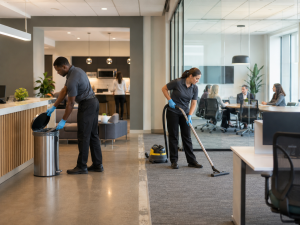
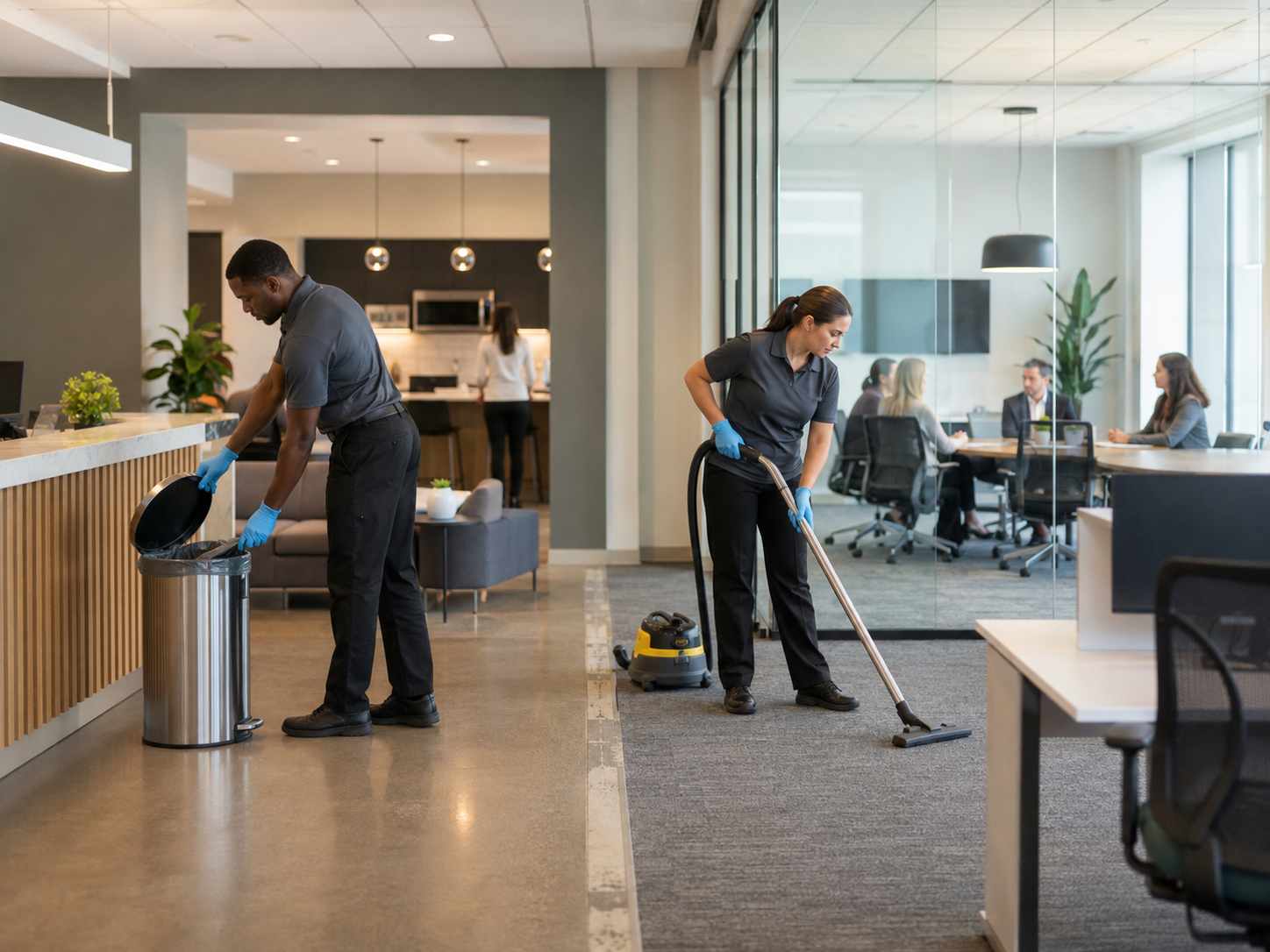
Daily office cleaning focuses on the responsibilities that affect employees and visitors throughout the workweek. It does not necessarily mean that every room receives a complete detailed cleaning during every visit.
A practical daily plan usually prioritizes areas that become untidy quickly, including:
- Restrooms
- Shared waste containers
- Breakroom counters and sinks
- Entrance glass
- Reception areas
- High-traffic floors
- Conference tables
- Frequently touched surfaces
Lower-priority responsibilities can rotate throughout the week. Private offices, low-use rooms, interior glass, detailed dusting, edges, and selected cabinet fronts may be assigned to particular service days rather than repeated during every visit.
Daily cleaning may make sense when:
- Many employees work on-site
- Customers visit regularly
- Restrooms receive steady use
- Breakrooms become untidy each day
- Waste containers fill quickly
- Several meetings occur throughout the day
- The office operates extended hours
- Employees are currently handling recurring cleaning tasks
The main benefit of daily cleaning is consistency. Waste, floor debris, fingerprints, and shared-space concerns can be addressed before they remain visible for several days or begin affecting multiple employees.
However, daily service is not automatically necessary for every office. A smaller workplace may not generate enough activity to justify the same tasks during every visit. The schedule should distinguish between daily priorities, rotating responsibilities, periodic work, and services that fall outside the standard agreement.
When Weekly Office Cleaning Can Be Practical
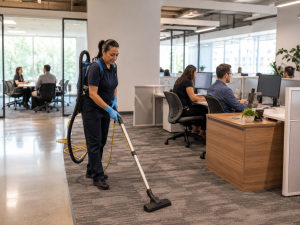
Weekly office cleaning places recurring responsibilities into one scheduled visit or one organized weekly routine. It may work well when the workplace remains reasonably orderly between appointments and employees are not expected to compensate for major service gaps.
A weekly visit may include:
- Vacuuming carpeted areas
- Mopping hard floors
- Emptying shared waste
- Cleaning restrooms
- Wiping accessible surfaces
- Cleaning breakroom counters and sinks
- Addressing entrance glass
- Cleaning shared tables
- Wiping agreed high-touch surfaces
Weekly service may be appropriate when:
- Only a small team works in the building
- Employees follow hybrid or remote schedules
- Customer visits are uncommon
- Restrooms receive light use
- Waste accumulates slowly
- Few people use the breakroom
- Shared rooms remain orderly between visits
- Employees maintain their personal work areas
The advantage of weekly cleaning is that the schedule can reflect lower workplace traffic. A provider may also have more time during one visit to complete a broader set of agreed tasks instead of repeating the same limited priorities each day.
Weekly service still needs a realistic scope. A heavily used office cannot be maintained properly by compressing several days of activity into one short appointment. Managers should monitor whether workplace conditions remain acceptable throughout the full interval between visits.
If employees regularly empty shared waste, clean before meetings, or report restroom concerns before the next scheduled appointment, weekly service may no longer match the way the office is being used.
Signs the Current Schedule Is Not Frequent Enough
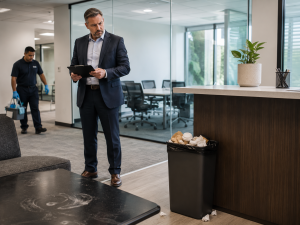
A cleaning schedule should be reviewed when the workplace repeatedly becomes untidy or uncomfortable before the next appointment.
Common warning signs include:
- Waste containers filling early
- Restroom supplies repeatedly running low
- Lingering odors
- Visible debris on floors
- Entrance glass remaining marked for several days
- Breakroom counters collecting residue
- Employees emptying shared waste
- Managers cleaning before customer meetings
- Repeated complaints about the same areas
One unusually busy week may not require a permanent change. A recurring pattern suggests that the current service frequency or scope no longer reflects workplace activity.
The solution does not always require moving directly from weekly to full daily cleaning. A business may add a second weekly visit, increase attention to selected areas, or create a targeted schedule for restrooms, waste, entrances, and breakrooms.
Customer-facing spaces may also need separate consideration. A business can have a small internal team while still receiving regular visitors. In that situation, reception areas, meeting rooms, entrance glass, customer restrooms, and visible floors may need more frequent attention than private offices.
Restrooms are another useful indicator. A weekly schedule may work when only a few employees use the facilities, but it becomes less practical when multiple employees and visitors rely on the same restrooms throughout the day.
Decision-makers should review actual conditions instead of waiting for the entire office to appear neglected.
A Hybrid Schedule Can Balance Different Needs
The choice does not have to be strictly daily or weekly. Some offices benefit from a hybrid schedule that gives high-use areas frequent attention while placing lower-use spaces on a weekly or periodic rotation.
A hybrid plan may look like this:
Daily or Several Times Per Week
- Restrooms
- Shared waste
- Breakrooms
- Entrance areas
- Reception spaces
- High-traffic floors
Weekly
- Private offices
- Low-use conference rooms
- Detailed dusting
- Interior glass
- Lower-traffic floors
- Selected cabinet fronts
Periodically
- Baseboards
- Accessible vents
- Corners and edges
- Gradual surface buildup
- More detailed floor attention
This approach can prevent businesses from assigning the same frequency to every room. It can also provide more practical coverage when only part of the office receives heavy use.
Breakrooms are a common example. Even a small workplace may need frequent attention in this area because food, drinks, shared appliances, and waste are concentrated in one space. Private offices in the same building may require far less service.
The cleaning scope should also define employee and provider responsibilities. Employees may remain responsible for personal dishes, stored food, and immediate spills. The provider can handle recurring tasks such as agreed surfaces, shared waste, floors, sinks, and appliance exteriors.
A hybrid plan works best when each task and room has a clear frequency instead of relying on general instructions such as “clean as needed.”
Attendance and Visitor Traffic Should Guide the Decision
Cleaning frequency should reflect actual office use rather than total employee headcount alone.
A company may employ many people but have only a small number working on-site each day. Another business may have a smaller team that uses the workplace continuously. These offices may require very different cleaning schedules.
Decision-makers should consider:
- Average daily attendance
- Hybrid-work patterns
- Busiest office days
- Customer appointment schedules
- Regular meetings
- Seasonal staffing changes
- Extended operating hours
- Special events
Visitor traffic also matters because customer-facing spaces may need to remain consistently presentable even when employee attendance is low.
A workplace with limited internal staffing may still require frequent attention to:
- Entrance doors
- Reception counters
- Visitor seating
- Meeting rooms
- Customer restrooms
- Visible waste containers
- Floors near main access points
Businesses with wider property-maintenance needs can review commercial cleaning services when deciding how office areas and customer-facing spaces fit within the overall facility plan.
The service schedule should be reviewed whenever attendance, visitor traffic, operating hours, or room use changes. A plan that worked several months ago may no longer be appropriate after employees return on-site, new rooms open, or customer activity increases.
Consistent Execution Matters More Than Frequency Alone
Daily cleaning does not provide value when agreed tasks are completed inconsistently. Weekly cleaning can work well when the scope is realistic and the provider follows it carefully.
Businesses should evaluate:
- Whether agreed tasks are completed
- Whether priority rooms receive enough attention
- Whether results remain consistent
- Whether concerns receive a response
- Whether the schedule matches actual use
- Whether low-use rooms receive unnecessary service
- Whether periodic tasks are documented
The service frequency and the written scope must work together. More visits will not correct unclear expectations, while fewer visits may still be effective when the workplace has limited activity and the provider completes the agreed work consistently.
Specific communication also helps. Managers should be able to identify a missed restroom task, full waste container, overlooked floor area, or recurring concern rather than relying on general complaints.
Businesses can review client testimonials and confirm coverage through the service area page when evaluating recurring support.
The best schedule is the one that reflects how the workplace is actually used. It should maintain shared spaces, prevent recurring service gaps, and avoid assigning unnecessary attention to rooms that receive little activity.
Request a Customized Office Cleaning Estimate
Tailor Maid Clean can review employee attendance, customer traffic, restrooms, shared spaces, operating hours, and preferred service times when preparing a customized plan. Businesses in McKinney, Texas can request a free office cleaning estimate to compare daily, weekly, and hybrid scheduling options.
FAQ
Is daily office cleaning necessary for every business?
No. Daily service may be appropriate for busy workplaces with regular customer traffic, heavily used restrooms, active breakrooms, and many on-site employees. Smaller or lower-traffic offices may be maintained through weekly or customized recurring service.
What are the signs that weekly office cleaning is not enough?
Common signs include overflowing waste, restroom complaints, visible floor debris, lingering odors, untidy breakrooms, marked entrance glass, and employees regularly completing cleaning tasks before the next scheduled visit.
Can an office combine daily and weekly cleaning tasks?
Yes. High-use areas such as restrooms, breakrooms, entrances, and shared waste can receive frequent attention while private offices, lower-use meeting rooms, and detailed tasks remain on weekly or periodic rotations.
What factors should determine office-cleaning frequency?
Businesses should consider daily attendance, customer traffic, restroom use, breakroom activity, shared spaces, operating hours, waste accumulation, and how well the workplace remains maintained between visits.