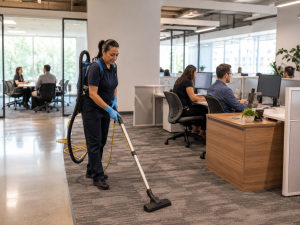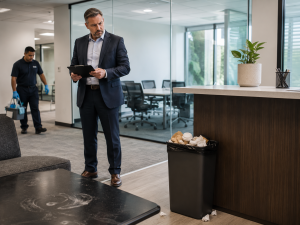
Office managers should not have to supervise every cleaning visit or repeatedly explain the same workplace priorities. A professional office cleaning provider in McKinney should offer a clear service scope, dependable scheduling, practical communication, and consistent attention.
For businesses in McKinney, Texas, the cleaning relationship should begin with an understanding of how the workplace operates. Employee attendance, visitor traffic, building access, restrooms, shared rooms, flooring, and operating hours can all affect how the service is organized.
The provider should also explain what is included, what employees must prepare, how concerns will be handled, and when the plan should be reviewed. Clear expectations reduce unnecessary follow-up and give the office manager a practical way to evaluate recurring service.
A Walkthrough and Written Scope Should Come First
A professional cleaning relationship should begin with a walkthrough of the workplace. The provider needs to understand the building layout, identify priority rooms, review access requirements, and determine which responsibilities belong in the recurring service plan.
A proposal developed without reviewing the property may overlook important details or assign unnecessary attention to rooms that receive little use.
During the walkthrough, the provider may ask about:
- The number of employees regularly working on-site
- Visitor and customer traffic
- Operating hours
- Restroom and breakroom activity
- Customer-facing spaces
- Flooring materials
- Shared equipment
- Preferred service times
- Security and access procedures
- Rooms or items that require special instructions
The provider should ask questions rather than assume every workplace has the same needs.
Following the walkthrough, the office manager should receive a written scope of work. General phrases such as “clean the office” or “service common areas” are not detailed enough to guide recurring service.
The scope should identify:
- Rooms included in the agreement
- Waste-removal responsibilities
- Restroom tasks
- Breakroom responsibilities
- Floor-care expectations
- Accessible surfaces
- Interior glass
- Agreed high-touch areas
- Rotating or periodic tasks
- Excluded services
It should also clarify whether employees must clear desks, secure confidential materials, wash personal dishes, or prepare specific rooms before the cleaning team arrives.
A written scope gives both sides the same reference point and makes it easier to discuss a missed task without relying on general impressions.
Scheduling, Access, and Security Should Be Clearly Defined
Office managers should know when the cleaning team is expected to arrive, how building access will work, and what happens when a visit must be changed.
Cleaning times should be coordinated around:
- Employee working hours
- Customer appointments
- Conference-room bookings
- Alarm procedures
- Building access
- Noise-sensitive periods
- Restricted areas
- Security requirements
A provider should not repeatedly arrive at times that interfere with active work or meetings without prior discussion. When a schedule change is necessary, the office manager should receive reasonable notice and a clear explanation of how the visit will be handled.
Access procedures also need to be documented. Cleaning teams may work in offices containing customer information, employee records, financial documents, electronics, personal belongings, and secured rooms.
The service plan should address:
- Keys and access cards
- Alarm instructions
- Locked or restricted rooms
- Confidential documents
- Doors that must remain secured
- Equipment that should not be moved
- End-of-visit security checks
- The process for reporting access problems
Employees may need to secure sensitive materials before service begins. The cleaning team should also understand which items and areas are not to be handled.
Clear access instructions protect the business and the provider. They also reduce the chance of a missed visit caused by confusion over entry, keys, alarms, or building procedures.
Workplace Materials and Priority Rooms Require Respect
A professional cleaning provider should respect documents, electronics, personal belongings, and active workspaces.
Cleaning team members should not reorganize desks, discard unmarked materials, move confidential papers, or handle specialized equipment without permission. The office manager and provider should agree on these boundaries before recurring service begins.
Employees may be responsible for:
- Clearing accessible desk surfaces
- Securing confidential documents
- Removing personal food containers
- Washing personal dishes
- Identifying equipment that should not be handled
- Reporting spills that require special attention
The provider can then address the agreed accessible surfaces without disturbing active work.
Priority rooms should also be identified in the scope. Restrooms, breakrooms, conference rooms, reception areas, and other shared spaces may require more consistent attention than private offices because they are used by multiple people.
The provider should understand which shared rooms affect daily operations and customer presentation. Office managers should not need to remind the cleaning team repeatedly that agreed restrooms, meeting rooms, waste areas, or reception spaces are priorities.
Businesses with wider facility needs can review commercial cleaning services when deciding how office cleaning fits into the maintenance of the broader property.
The goal is not to assign the same service level to every area. It is to document the rooms that matter most and protect workplace materials while recurring responsibilities are completed.
Communication and Missed-Task Corrections Should Be Practical
Office managers should know exactly who to contact when they have a question, report a concern, or request an adjustment.
A professional provider should offer a practical communication process that includes:
- A clearly identified contact person
- Timely acknowledgment of concerns
- Notice of schedule changes
- Follow-up after reported problems
- Documentation of requested adjustments
- Clear explanations of included and excluded work
The provider may not be able to correct every concern immediately, but the office manager should understand what will happen next and when the issue will be reviewed.
Even dependable teams may occasionally overlook a task. The difference between an isolated mistake and an ongoing service problem is often how the provider responds.
When a concern is reported, the provider should:
- Confirm the room, surface, or responsibility involved.
- Review whether the task is included in the scope.
- Explain how the issue will be addressed.
- Complete the correction within a reasonable period.
- Take steps to reduce the chance of repetition.
Specific feedback is more useful than a general statement that the office does not look clean. An office manager can identify a missed waste container, incomplete floor area, overlooked restroom responsibility, or recurring problem in a particular room.
One missed task does not always indicate unreliable service. Repeatedly unresolved concerns, unanswered messages, or short-term corrections that do not last are more serious warning signs.
A dependable provider should make office management easier rather than create another recurring responsibility that requires constant follow-up.
Consistency Should Be Visible Across Recurring Visits
Office managers should expect a reasonably consistent standard from one cleaning visit to the next.
An office should not appear thoroughly maintained after one appointment and noticeably incomplete after the next without an understandable reason. Unexpected spills, unusual visitor traffic, or special events can affect conditions, but agreed responsibilities should still be completed consistently.
Common service concerns may include:
- Certain rooms being skipped
- Waste removal varying between visits
- Restroom quality changing significantly
- Floors receiving incomplete attention
- Agreed surfaces being handled irregularly
- Periodic responsibilities being forgotten
- Reported problems returning repeatedly
A professional provider may use checklists, service notes, documented instructions, and periodic reviews to support consistency.
Office managers do not need to inspect every surface after every appointment. A practical quality-review process may include occasional walkthroughs, employee feedback, and documentation of repeated concerns.
The most useful review asks whether:
- Included tasks are being completed
- Priority rooms remain consistent
- Communication is dependable
- Corrections are maintained
- Service timing still works
- Employee responsibilities remain clear
- The current scope still reflects office use
Businesses evaluating recurring support can review client testimonials and confirm local coverage through the service area page.
Consistency does not mean every visit will look identical. It means the provider follows the documented scope, communicates when circumstances change, and addresses recurring concerns rather than allowing them to continue.
The Cleaning Plan Should Adapt When the Office Changes
Workplaces change over time. A business may add employees, increase visitor traffic, adjust operating hours, open new rooms, install equipment, or change how shared areas are used.
The cleaning plan should be reviewed when these changes affect recurring responsibilities.
A review may consider:
- Whether the current scope still covers all active rooms
- Whether service timing remains appropriate
- Whether priority spaces have changed
- Whether access procedures need updating
- Whether new equipment requires special instructions
- Whether recurring complaints point to a service gap
- Whether some tasks are no longer necessary
- Whether additional responsibilities need to be documented
Flexibility does not mean every new request is automatically included in the existing agreement. It means the provider can assess the change, explain whether the scope must be updated, and document the revised expectations before the work begins.
Office managers should also understand what the agreed service covers. Changes involving additional rooms, more frequent visits, expanded responsibilities, or detailed one-time work should be discussed before they are added.
A short review can often resolve a problem without replacing the entire cleaning arrangement. Adjusting one room, changing a service time, or clarifying one responsibility may be enough to restore consistency.
The provider and office manager should treat the service plan as a working document. It should remain clear, practical, and aligned with the workplace rather than staying unchanged after the office itself has changed.
Request an Office Cleaning Estimate
Tailor Maid Clean can review the office layout, operating hours, shared spaces, access procedures, and recurring service priorities when preparing a customized plan. Businesses in McKinney, Texas can request a free office cleaning estimate to discuss clear expectations for recurring workplace cleaning.
FAQ
What should an office cleaning agreement include?
An office cleaning agreement should identify included rooms, service frequency, recurring tasks, rotating responsibilities, preferred cleaning times, access procedures, employee responsibilities, excluded services, and the process for reporting concerns.
How should an office manager report a missed cleaning task?
The manager should identify the specific room, surface, task, and expected result. The provider should confirm whether the responsibility is included, explain how it will be corrected, and take reasonable steps to prevent the issue from recurring.
What security expectations should be discussed with a cleaning company?
The business and provider should document building access, keys, alarm procedures, restricted rooms, confidential materials, items that should not be moved, locked doors, and end-of-visit security checks.
When should an office cleaning plan be reviewed?
The plan should be reviewed when staffing, operating hours, office layout, visitor traffic, access procedures, equipment, or recurring service needs change. Repeated concerns may also indicate that the written scope needs an update.